
Go Board – Goban
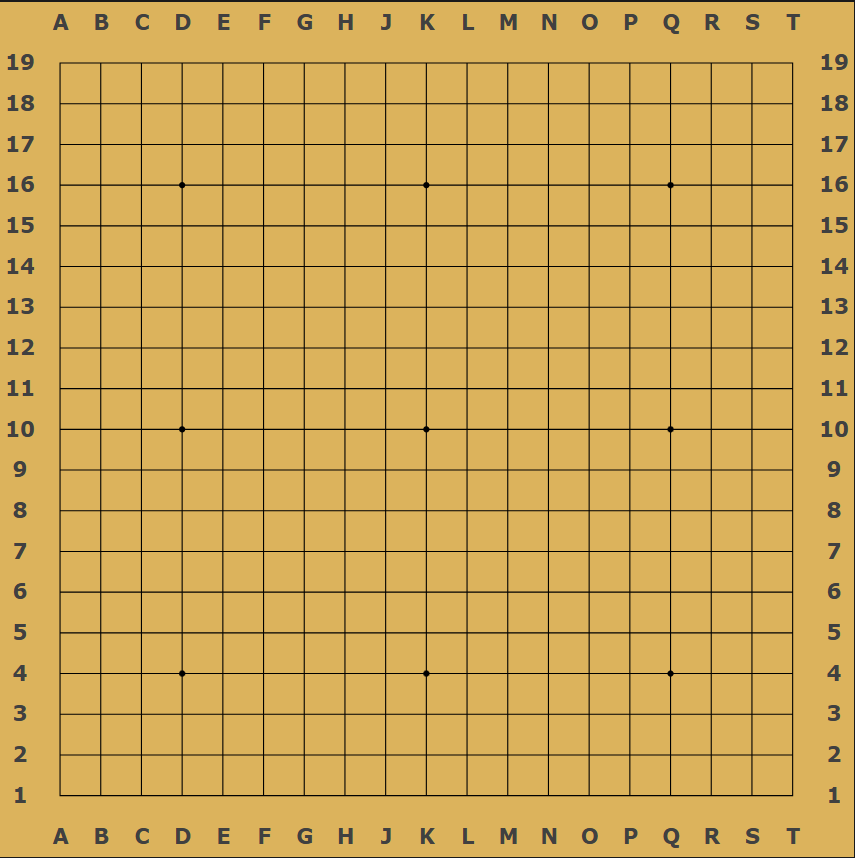
Go is played on a square board featuring intersecting vertical and horizontal lines.
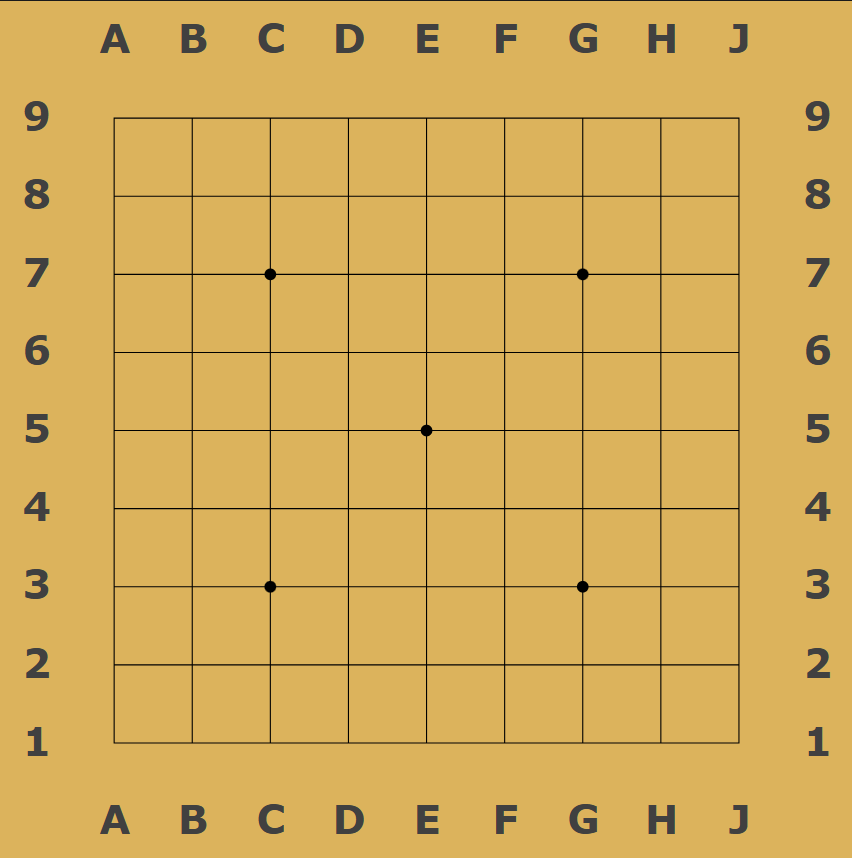
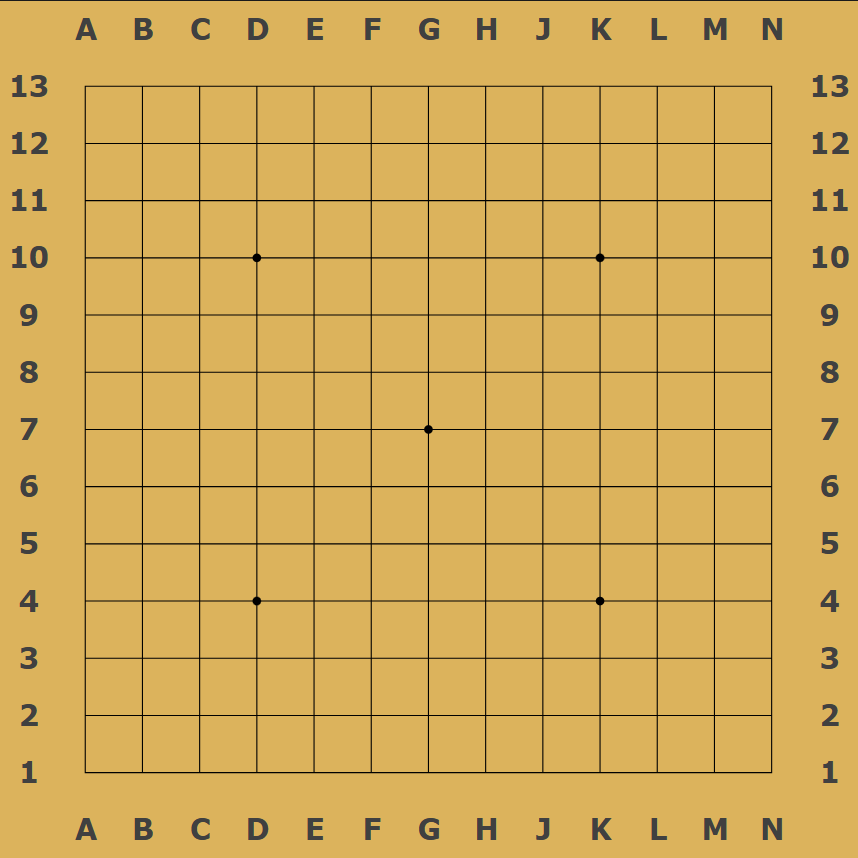
Go board sizes are 9×9, 13×13, or 19×19 lines.
The 19×19 board is the official tournament size.
The dark dots on the board indicate the positions where handicap stones are placed.
Valid Moves
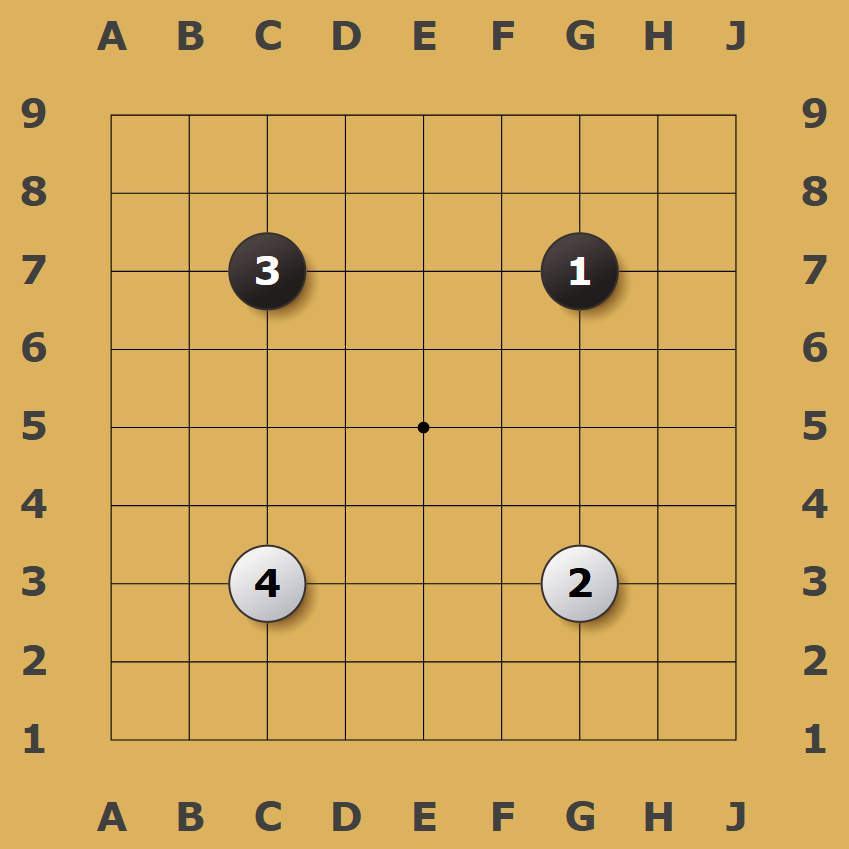
The game begins on an empty board.
In Go, moves are made at the intersections of the lines.
This differs from conventional games like chess and checkers.
The figure shows the first four moves at the start of the game.
The moves are numbered to indicate the order of play.
In Go, Black makes the first move!
Another valid move is to pass, which cannot be shown in the figure. The game ends when both players pass.
In handicap games, Black starts with a certain number of stones already on the board—determined by the handicap—and White makes the first move.
Capturing Stones
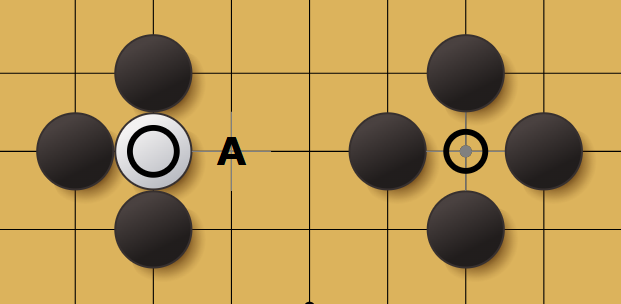
During a game of Go, one or more stones can be captured by completely surrounding them—that is, by filling all the empty points around them.
To give two examples: The figure above illustrates the capture of a stone. When Black plays at point A, the White stone is captured and removed from the board.
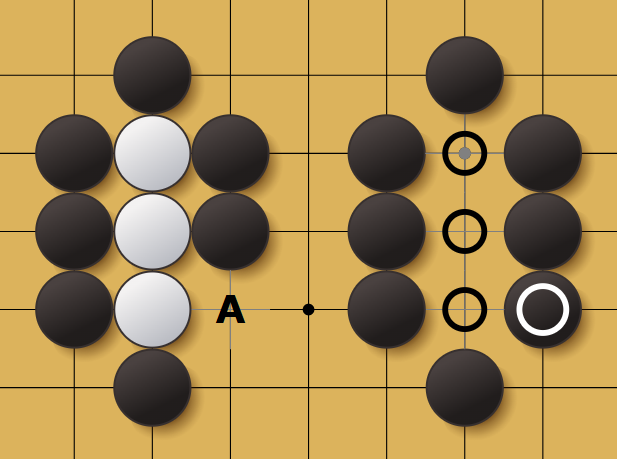
The second diagram shows the capture of three stones. When Black plays at point A, the captured white stones are removed from the board, resulting in the configuration shown on the right.
Objective of the Game
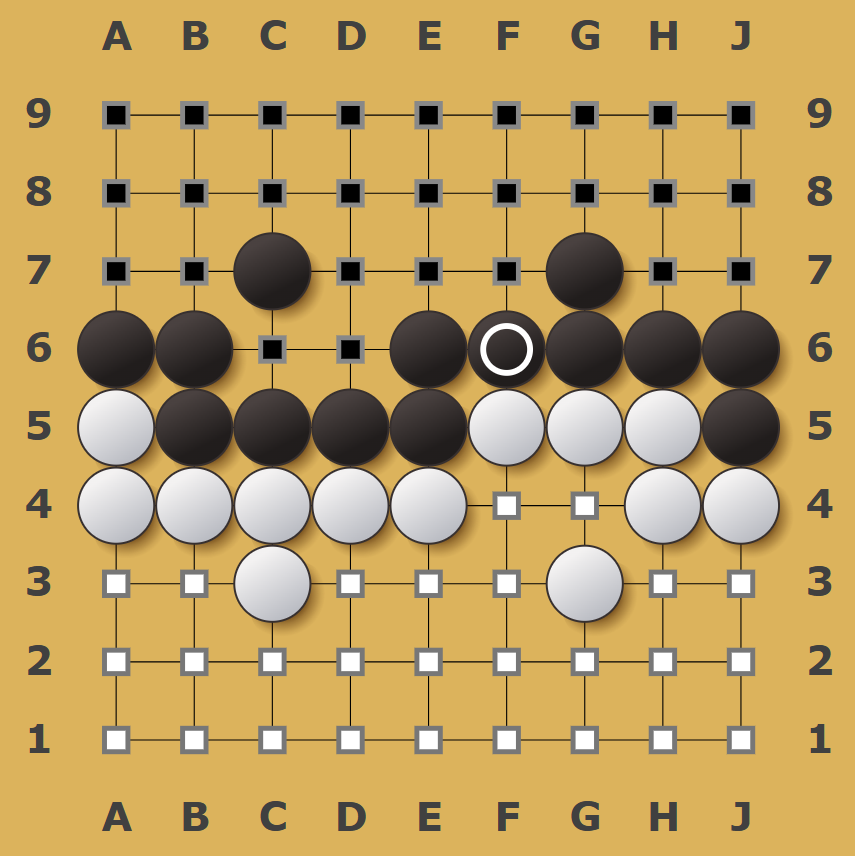
The objective in Go is to secure more territory on the board than your opponent. This territory consists of the total number of intersections on the board that are enclosed and controlled by your stones.
The figure shows a completed game.
The result of this game is as follows: Black holds 27 intersections—or 27 points—on the board, and White also holds 27 intersections—or 27 points.
Although the game appears to end in a draw, White wins once “Komi” is factored in.
At the end of a game of Go, a value known as “Komi” is added to White’s score. This serves to balance out the advantage held by Black, who starts the game and makes the first move. Komi is a value that includes a half-point, such as 0.5 or 6.5; this ensures that games do not end in a draw and that one player emerges as the winner.
Ko
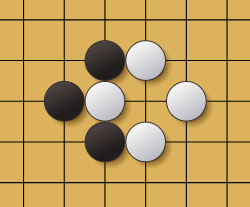
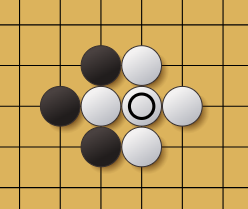
Dia 1: When the Black puts the opponent White stone into atari…
Dia 2: White can protect its stone.
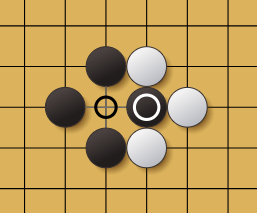
Dia 3: Or, it can choose not to defend and play elsewhere. In that case, Black can capture the White stone.
But now it’s White’s turn…
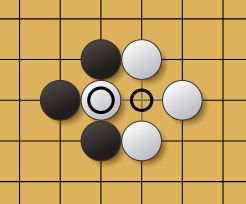
Dia 4: White could also decide to capture Black’s piece…
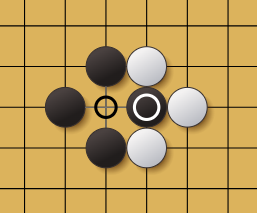
Dia 5: Subsequently, Black could also have attempted to capture White’s stone by recreating the previous position (Dia 1).
These moves can repeat indefinitely. To prevent this, the game has a special rule: the Ko rule. The Ko rule prevents the exact same position (across the entire board!) from recurring. When a Ko situation arises, players are first required to play elsewhere on the board; if they receive a response to that move, they can then return and recapture the opponent’s stone involved in the Ko. The opponent, in turn, is also forced to play elsewhere. This situation is known as a Ko fight.